

A Portland right-of-way (ROW) permit stands as the crucial gatekeeper for every construction project touching city streets. Without it, your plans stall before they even begin, tangled in red tape from the Portland Bureau of Transportation (PBOT) and sometimes BES or Water.
This guide breaks down the PBOT permitting process step-by-step, revealing the specific technical nuances you need to keep your project moving on schedule.
1. Laying the Paperwork Foundation
Before diving into construction, setting a strong paperwork foundation is crucial.
- Street Opening Bond: Acts as a financial guarantee that work meets city standards.
- Street Closure Insurance: Protects against public liability during traffic impacts.
- The DevHub PDX Portal: Your digital gateway for managing applications.
The “Paperwork Headache”: Navigating DevHub
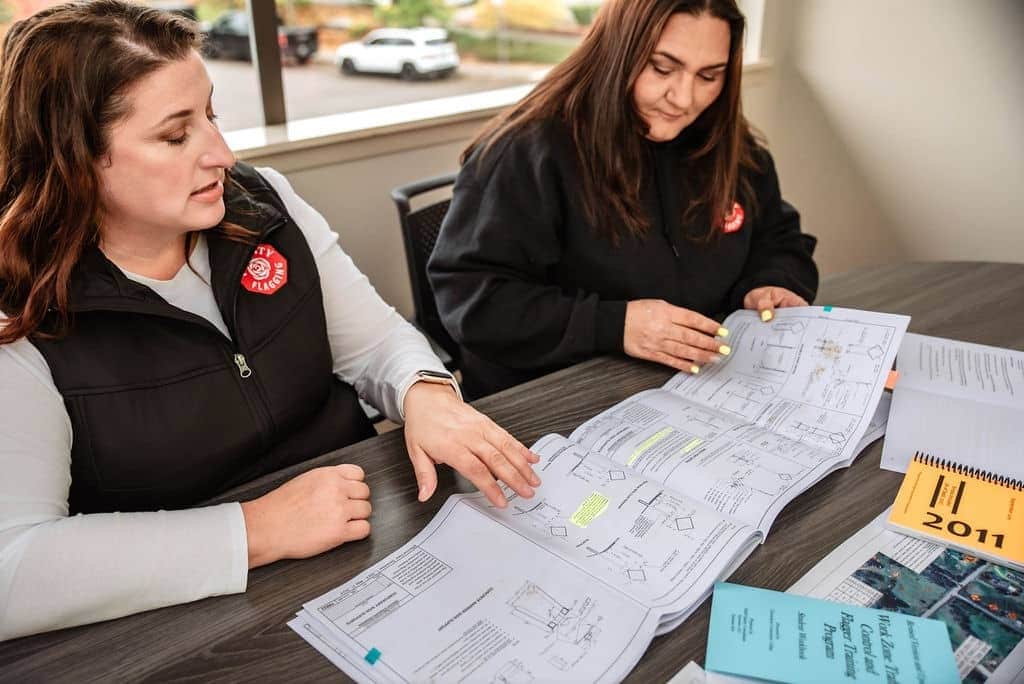
While the $20,000 bond is a known hurdle, the single biggest friction point for contractors is Portland’s Single PDF Process. This mandatory workflow governs how plans are compiled and submitted. To avoid automated flags and delays, you must master:
- Strict File Naming Conventions: Non-compliant names are flagged before a reviewer ever sees them.
- PDF Optimization: Specific requirements for resolution, layering, and file structure.
- Checksheet Management: Resubmissions for corrections must mirror the original’s strict formatting, or you risk a compounding bottleneck in approval cycles.
2. Crafting a Technical Packet That Gets Approved
A well-prepared technical packet is pivotal. Beyond a clear project narrative and site plans, your Traffic Control Plan (TCP) is the most scrutinized document.
Why PBOT Rejects TCPs (And How to Avoid It)
PBOT has jurisdiction-specific requirements that differ from standard Oregon practice. Watch for these four common rejection reasons:
- Inadequate Pedestrian/Bike Accommodations: PBOT requires granular detail on alternate routing and ADA considerations. Vague channelization is an instant revision.
- Non-Compliant Signage Verbiage: You must use specific PBOT-approved sign descriptions rather than generic industry terms.
- Incorrect Sign Sequencing: PBOT standards differ from MUTCD or OTTCH conventions. Following standard state practice instead of city-specific sequencing will lead to rejection.
- Over-Signing: Interestingly, PBOT favors minimal signage. For example, they typically remove the Directional Transition (DT) pairing required by state standards. Including it may be flagged as a revision.
3. Pro-Tip: Use the Right Maps
The original guide suggests checking PortlandMaps.com for conflicting permits. However, for high-level TCP development, savvy contractors use the City of Portland’s ArcGIS platform (pdx.maps.arcgis.com).
This tool is a requirement for work within Portland’s jurisdiction. By reviewing these layers during the design phase, you can identify:
- Bus stops and traffic signals to avoid operational conflicts.
- Posted speed limits to ensure your taper lengths are accurate.
- Greenways and sidewalk infrastructure to plan better pedestrian detours.
Identifying these contingencies upfront prevents “Reviewer Checksheets” that can stall your project for weeks.
4. Inspections and Project Closeout
Inspections are the final hurdle.
- Pre-restoration Inspection: Confirms temporary work meets safety standards.
- Final Inspection: The “green light” confirming all work complies with city requirements. Schedule this promptly to avoid closeout delays.
Conclusion: Leverage Local Expertise
Securing a ROW permit doesn’t have to be a project-stalling ordeal. By mastering the Single PDF Process and understanding PBOT’s specific TCP preferences, you can move from “approved” to “complete” without the headaches.
At Rose City Flagging, we provide the tailored guidance and local expertise needed to navigate Portland’s permitting maze with confidence.
Does your upcoming project require a complex pedestrian detour or a high-volume lane closure?